
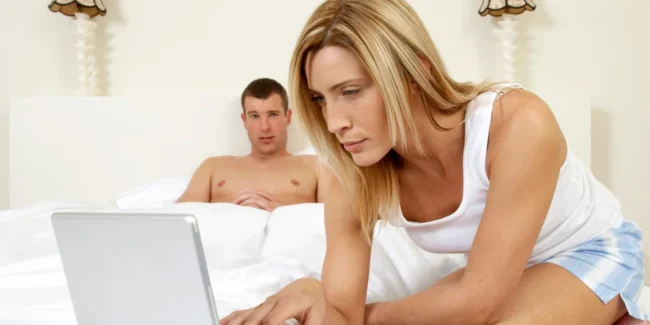
In addiction treatment we learn quickly that the substance or behaviour isn’t always the core issue. The core issue is often what the behaviour is doing for the person, and what the person has to hide in order to keep doing it. Porn compulsion thrives because it is private, accessible, and socially easy to rationalise. You can tell yourself it’s harmless because there’s no smell, no hangover, no obvious outward chaos. You can do it while looking “fine” on the outside. That makes it easier for the behaviour to grow unnoticed.
This is not about moral panic. It is about function and harm. When porn becomes your main way to regulate stress, loneliness, anxiety, or numbness, and when you keep doing it despite consequences, you are no longer in casual use. You are in compulsion. And compulsion almost always comes with secrecy.
Secrecy is not a side effect
The first thing to understand is that secrecy isn’t something that happens after porn becomes a problem. Secrecy is often what turns it into a problem. When someone starts hiding, they create isolation. Isolation increases stress. Stress triggers the urge. The urge leads to porn. Porn leads to shame. Shame leads to more secrecy. That is the loop.
People often tell themselves they hide because their partner will “overreact” or because it’s “private.” Sometimes partners do react strongly, but the reason secrecy is such a red flag is that it shows the person knows, on some level, that they’re not in control. You don’t hide what you genuinely feel is healthy and balanced. You hide what you suspect is becoming unhealthy.
Secrecy also gives porn a special kind of power. Anything done in secret feels more intense. The brain learns that the behaviour is both soothing and forbidden, and that combination can strengthen the compulsion. It becomes a private world where the person escapes responsibility and discomfort. Over time, the secret life starts to feel safer than real intimacy, because real intimacy requires vulnerability and honesty, and secrecy is the opposite of that.
How porn becomes a shortcut for stress and discomfort
Porn can become addictive because it changes your state fast. It can shift you from anxious to focused, from lonely to stimulated, from numb to activated, from stressed to temporarily relieved. That is emotional regulation. It’s not different in principle from someone using alcohol to relax or drugs to escape. The mechanism is the same, discomfort arises, the person seeks a rapid state change, the brain rewards the relief, and the behaviour repeats.
Over time, the person’s brain learns, porn is the fastest way out. That’s when life starts to narrow. Instead of sitting with anxiety or having a difficult conversation, they escape. Instead of feeling loneliness and reaching out, they escape. Instead of dealing with stress properly, they escape. Porn becomes less about sexual desire and more about coping.
This is why “just stop watching” isn’t enough for many people. If porn is your coping tool, you need a new coping tool. Otherwise you can white-knuckle for a week, a month, maybe longer, but when stress spikes, the brain will go back to what it knows works quickly.
What porn compulsion does to relationships
Partners often notice changes before they know the cause. Less interest in sex. Emotional distance. Irritability. Defensiveness. Disappearing into the bathroom with the phone. Late nights awake. Secretive browsing habits. A subtle feeling that the person is present but not really present.
Porn addiction also changes expectations. If a person’s primary sexual experience is curated, edited, exaggerated content, real intimacy can start feeling inadequate. This can lead to pressure, dissatisfaction, or unrealistic expectations around bodies, performance, and behaviour. The partner may feel they can’t compete, and that feeling can destroy confidence.
There is also the betrayal factor. Even if porn isn’t “cheating” in someone’s definition, the secrecy often feels like betrayal. It’s the lying that breaks trust. It’s the feeling of being shut out. It’s the sense that something is happening behind your back. Trust isn’t only about sex, it’s about openness. When porn is hidden and defended, the relationship becomes a place of suspicion rather than safety.
Many couples get stuck here. The partner wants the behaviour to stop immediately. The addict wants the partner to calm down and “not make it a big deal.” Both positions are understandable, and both miss the deeper issue, the addict is using porn as emotional regulation and hiding it, and the partner is reacting to secrecy and disconnection, not just the videos.
The shame loop, why guilt doesn’t fix anything
A lot of people believe shame will help them stop. They think if they feel bad enough, they’ll change. Shame rarely leads to stable change. Shame increases stress. Stress increases urges. Urges push the person back into the behaviour. Then shame increases again. It’s a self-feeding system.
This is why people often relapse after making big promises. They start strong. They feel motivated. They avoid porn for a while. Then life hits, stress, boredom, loneliness, conflict, fatigue. They slip. Then they hate themselves. Then they hide. Then the behaviour increases. It’s not because they don’t want to stop. It’s because shame is not a plan.
A plan is structure and accountability. A plan is understanding triggers. A plan is building coping skills. A plan is honesty with someone else. Addiction is rarely defeated in private because private is where it thrives.
When porn addiction becomes a treatment issue
Porn compulsion becomes a serious problem when it starts controlling your time, your mood, your relationships, and your self-respect. If you are watching more than you intend, if you can’t stop even when you plan to, if you’re watching at work, if you’re losing sleep, if you’re lying, if you’re escalating into content that makes you feel disturbed, if your intimacy is falling apart, if you’re using porn to manage stress or depression, those are treatment-level signs.
The same applies if porn is paired with other compulsions, online gambling, alcohol, drugs, compulsive spending, constant doomscrolling. Often these behaviours cluster. The phone becomes the gateway and the person rotates between quick hits depending on mood. If that’s happening, focusing on porn alone won’t fix the underlying issue. The underlying issue is the reliance on instant relief.
At Changes Rehab in Johannesburg, we don’t treat porn addiction like a moral failure. We treat it like an addiction pattern. That means honest assessment, identifying triggers, building emotional regulation, and working on relationship repair if the person is in a relationship. It also means confronting denial and minimisation, because porn addiction is easy to minimise precisely because it’s so common.
A grounded message to the person stuck in secrecy
If you are stuck in this loop, the most dangerous thing you can do is keep treating it like a private habit you will “sort out later.” Later often turns into years. The longer secrecy runs, the more it damages your self-respect and your relationship capacity. The secrecy is already telling you that something is wrong, even if you keep arguing with yourself about whether it counts as addiction.
You don’t have to live in that double life. You don’t have to keep managing tabs, hiding phones, deleting history, and pretending everything is fine. That constant hiding is exhausting, and it doesn’t end well. The way out starts with telling the truth to someone safe, putting practical barriers in place, and getting professional support if you can’t stop on your own.
Porn addiction doesn’t only steal time. It steals honesty. It steals connection. It makes real intimacy feel risky and fake intimacy feel safe. Recovery is the process of flipping that back, making honesty and real connection feel safer than secrecy.
If you’re ready to stop the loop, stop trying to fight it alone in the same private space where it grew. Get help that understands addiction as behaviour and coping, not as moral failure. The sooner you act, the less you have to repair.